

Art and attention
Drawing from life

“A writer, I think, is someone who pays attention to the world,” Susan Sontag said during a speech at the Frankfurt Book Fair. She dolled out another attention edict to students at Vassar Collage sometime later: “Do stuff. Be clenched, curious. Not waiting for inspiration's shove or society's kiss on your forehead. Pay attention. It's all about paying attention. Attention is vitality. It connects you with others. It makes you eager. Stay eager.”
I’ve been thinking a lot about attention lately, mine particularly, which has never had the best endurance. I’ve had an “attention deficit” since I was a kid. My mind cannot fix on one thing for too long. I’ve long noticed my failing focus span in relation to the people around me (as well as having the official diagnosis). In middle school, I saw how my peers could tuck into textbooks and remain engaged for much longer than I could. A noise distracted me, a memory, a worry, a whisper from a friend. Then my mind was off on the new thread before I pulled it back to the task at hand. My love of reading helped me with this shortcoming by building a muscle of sustained deep work.
Another thing that helped: exercise. It’s true what they say, exhaust the body to exhaust the mind. Still as college came and went and then grad school, I observed in my peers an admirable ability to engage in long hours of silent study that didn’t seem available to me. I did my work nonetheless but it was, and still is, fitful and completed in starts and stops. I write for a short amount at a time, understanding that rabbit holes will call me and I will follow them down into some alternate universe only to claw myself out again.
I have protocols in place to help me with my attention. I brick my phone. I’ve installed Freedom. I’ve disabled messenger from my computer. And yet. Even with these protections in place, I know my already weak and depleted attention has been hijacked by the current moment of doomscrolling and social media and vertical videos. I’m also nursing an obsession with local politics that has me streaming hours-long city council meetings on my phone while I multitask. I love podcasts. I’m sure I’d qualify as a super user. I’m constantly uploading some analysis through my earbuds. Staying engaged, right? Paying attention?
We know the facts and the studies that tell us the amount of information we consume today is way more than the human brain can handle. In fact “scientists have measured the amount of data that enter the brain and found that an average person living today processes as much as 74 GB in information a day (that is as much as watching 16 movies), through TV, computers, cell phones, tablets, billboards, and many other gadgets. Every year it is about 5% more than the previous year [1]. Only 500 years ago, 74 GB of information would be what a highly educated person consumed in a lifetime, through books and stories.” OMG.
I worry a lot about what this is doing to my brain and my art work, especially my ability to reach the higher planes of consciousness needed to create. Whatever it is, I know it’s not good for me on a personal level and pretty bad for art making on a macro level.
Some of my information consumption feels like “pay attention,” that inspired encouragement from Sontag. But there is a point where consuming information just becomes overconsumption. My brain can’t really even process it, much less pay attention.
What I think Sontag meant by pay attention was to be awake to your world. Notice the details that make up your life. Get to specificity. I can’t do true observing while walking down the street with earbuds in scrolling on my phone. It’s depressing to think about for too long: how I’ve carved out so many precious hours from my day and fed them directly into a small screen that’s collecting my data and harvesting my attention for advertisements.
And there are ways to resist.
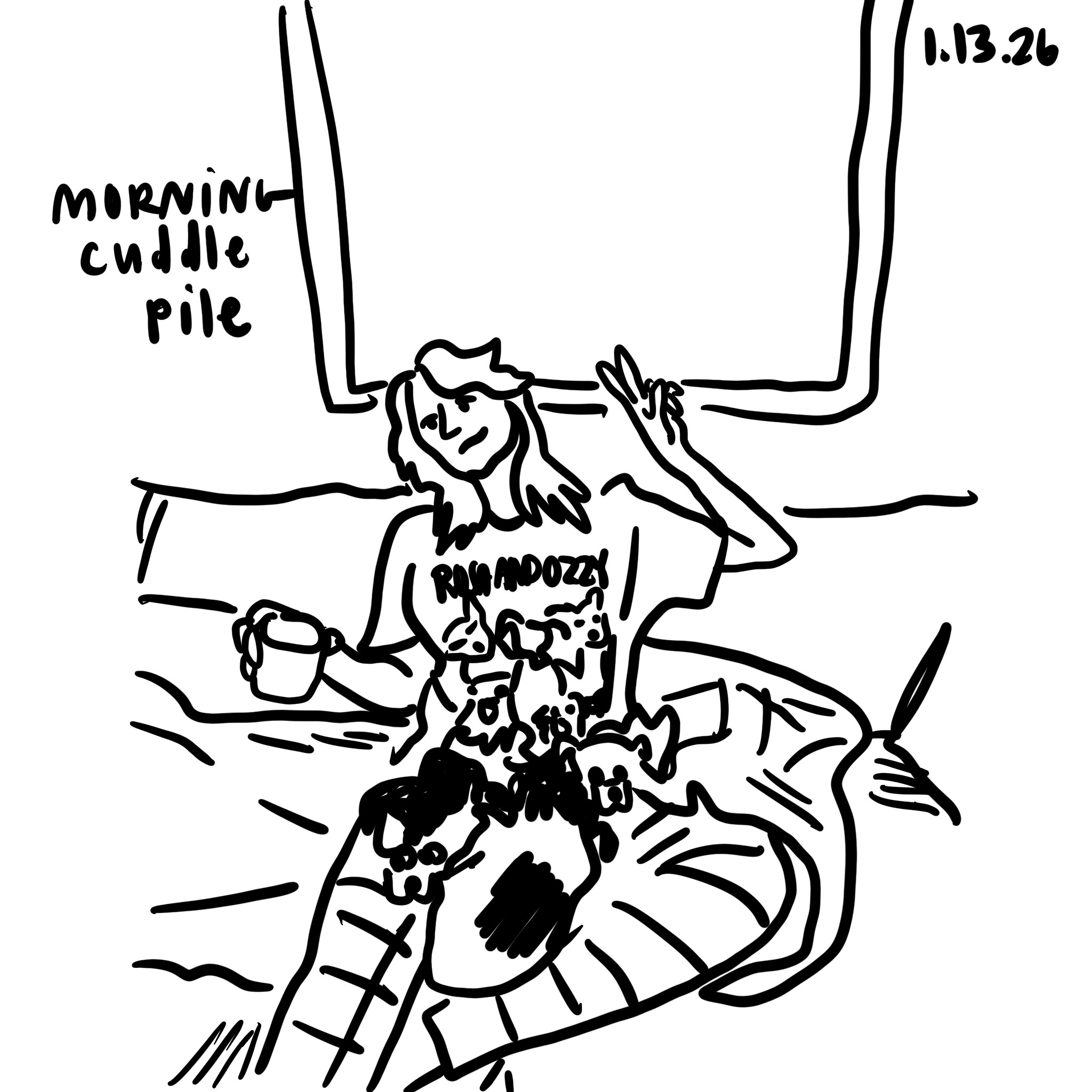
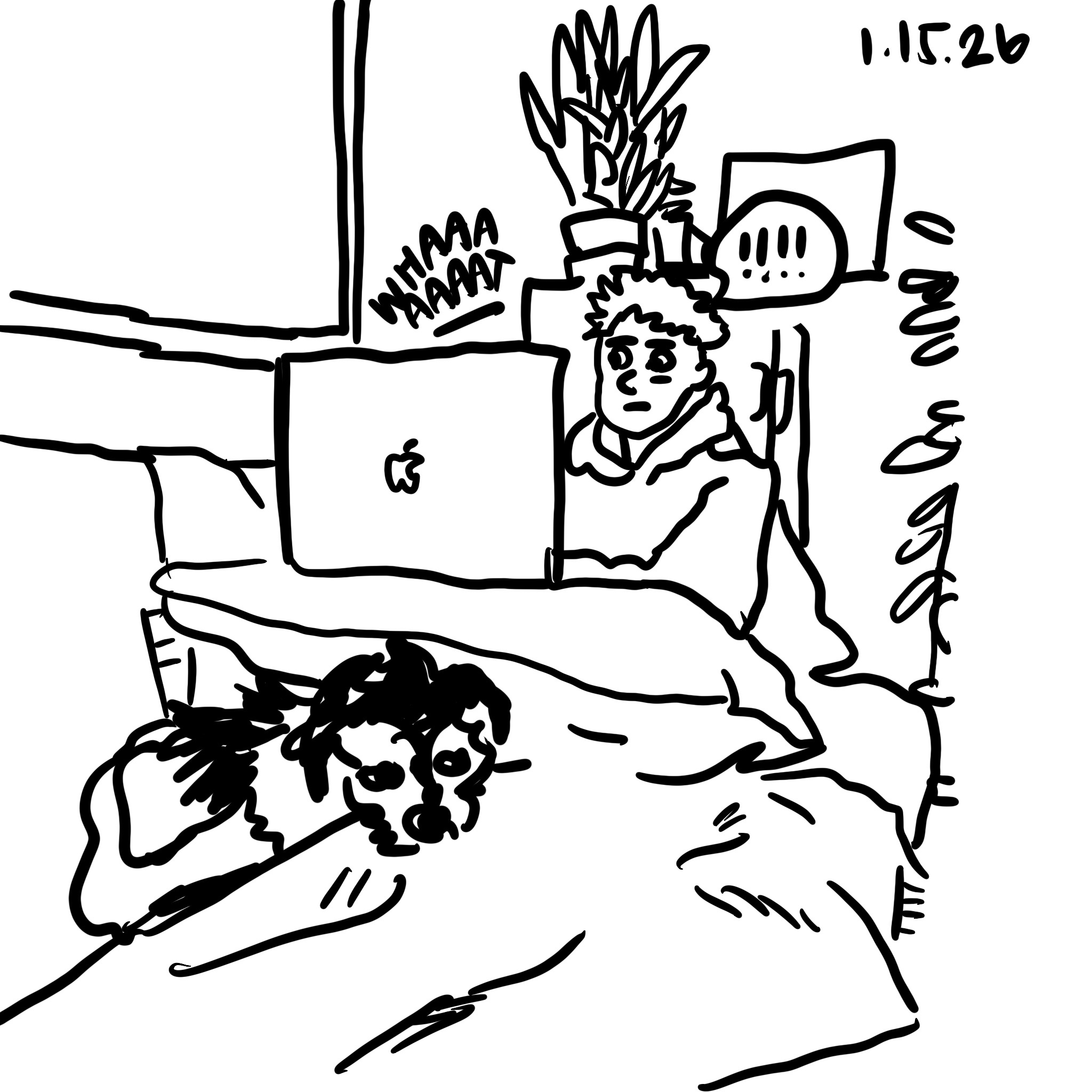
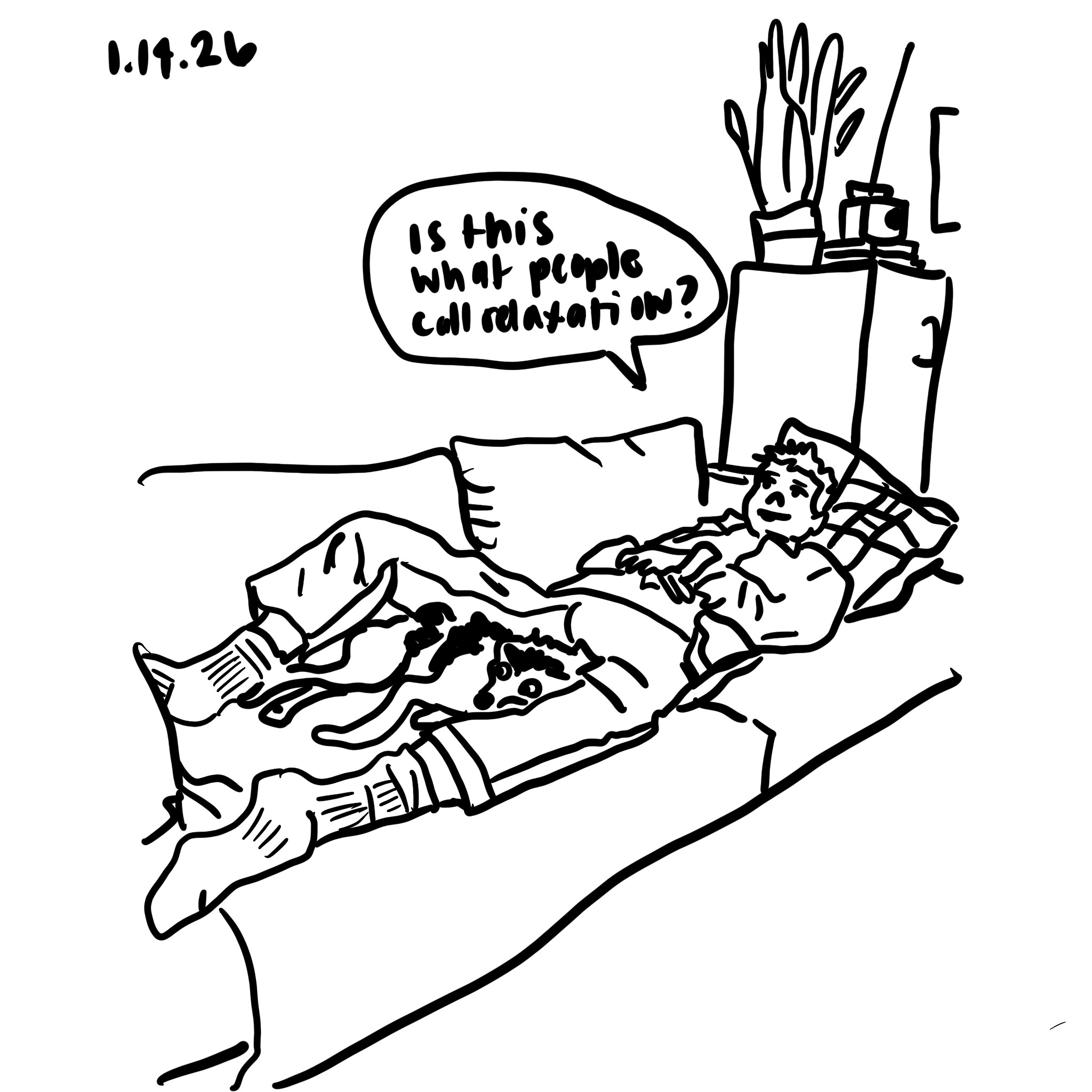
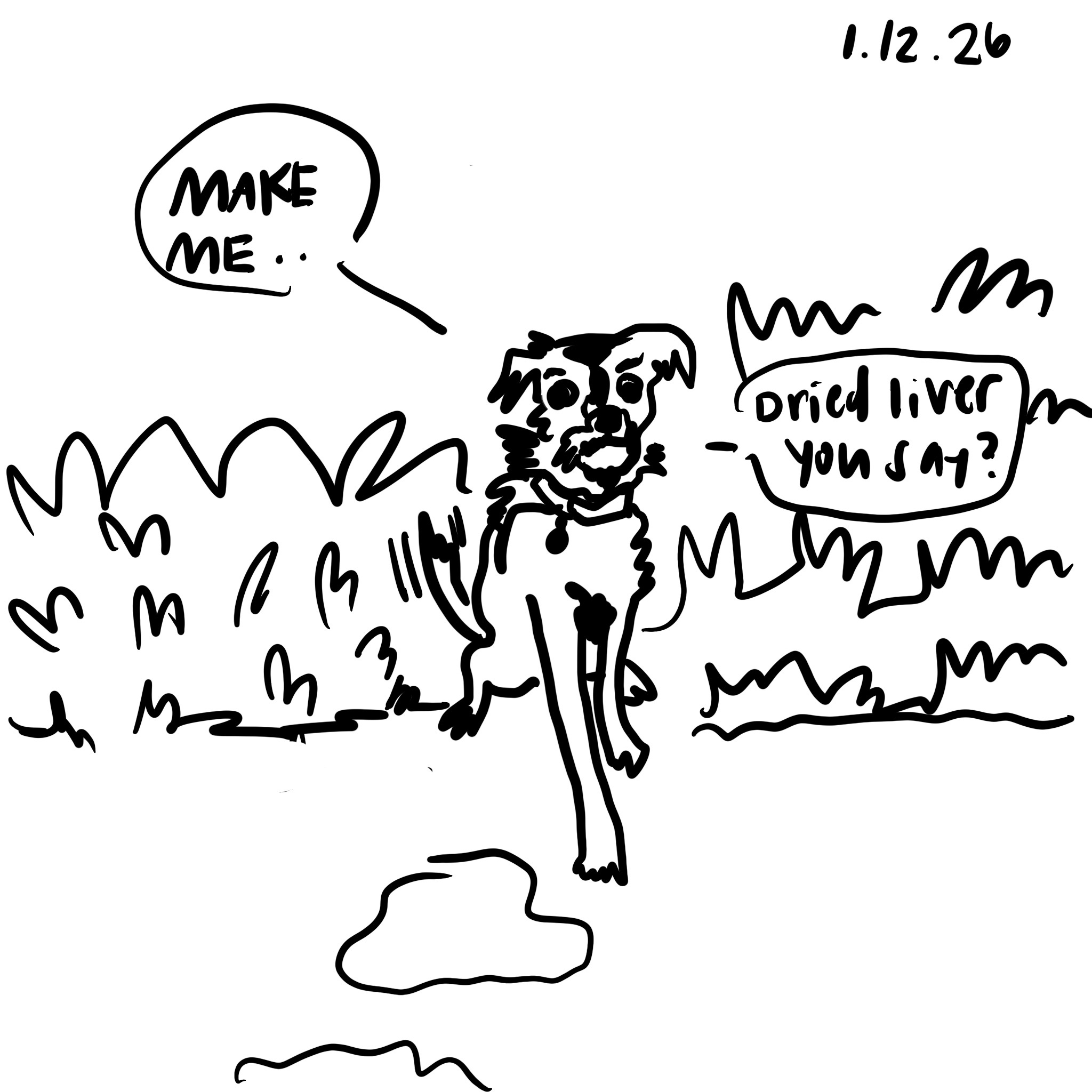
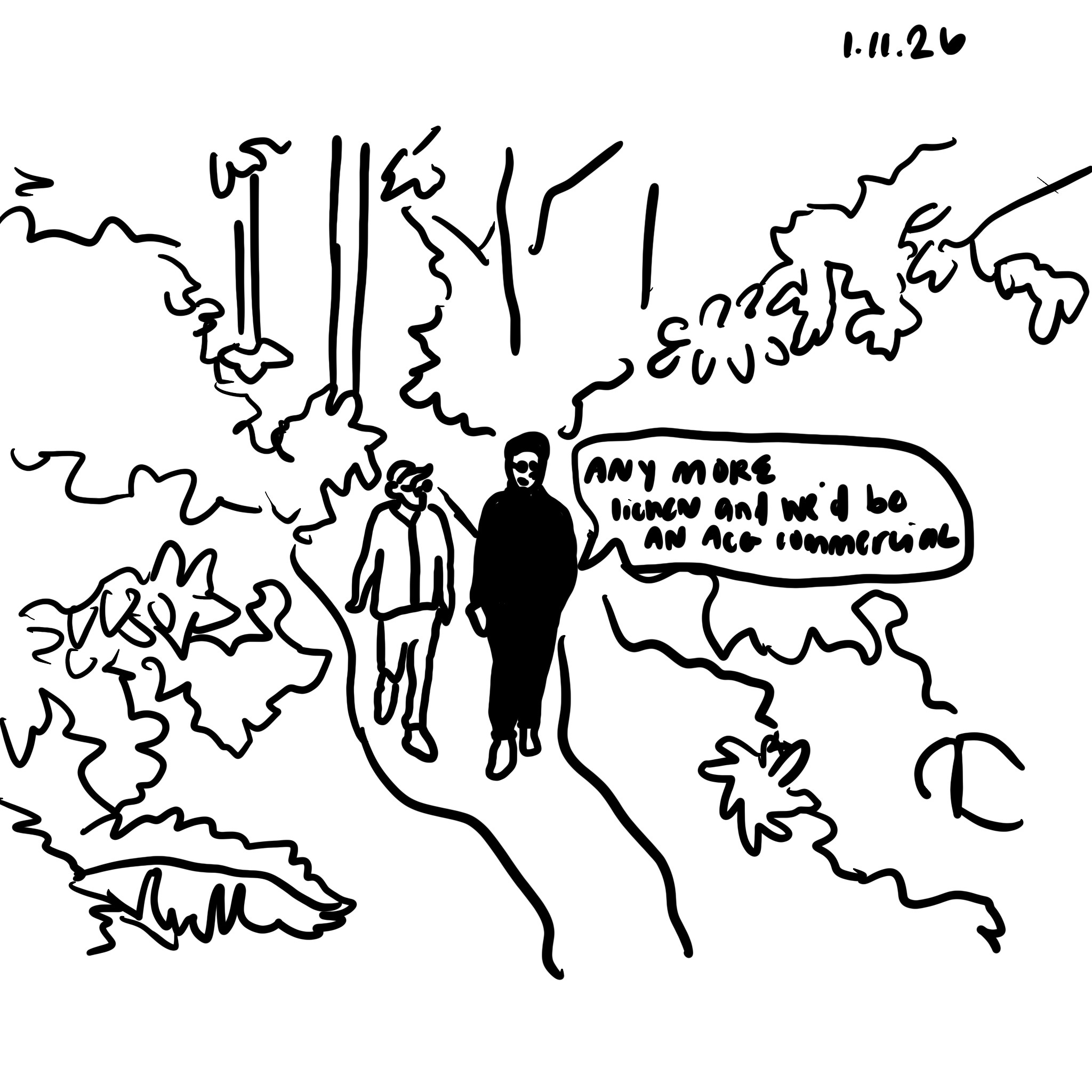
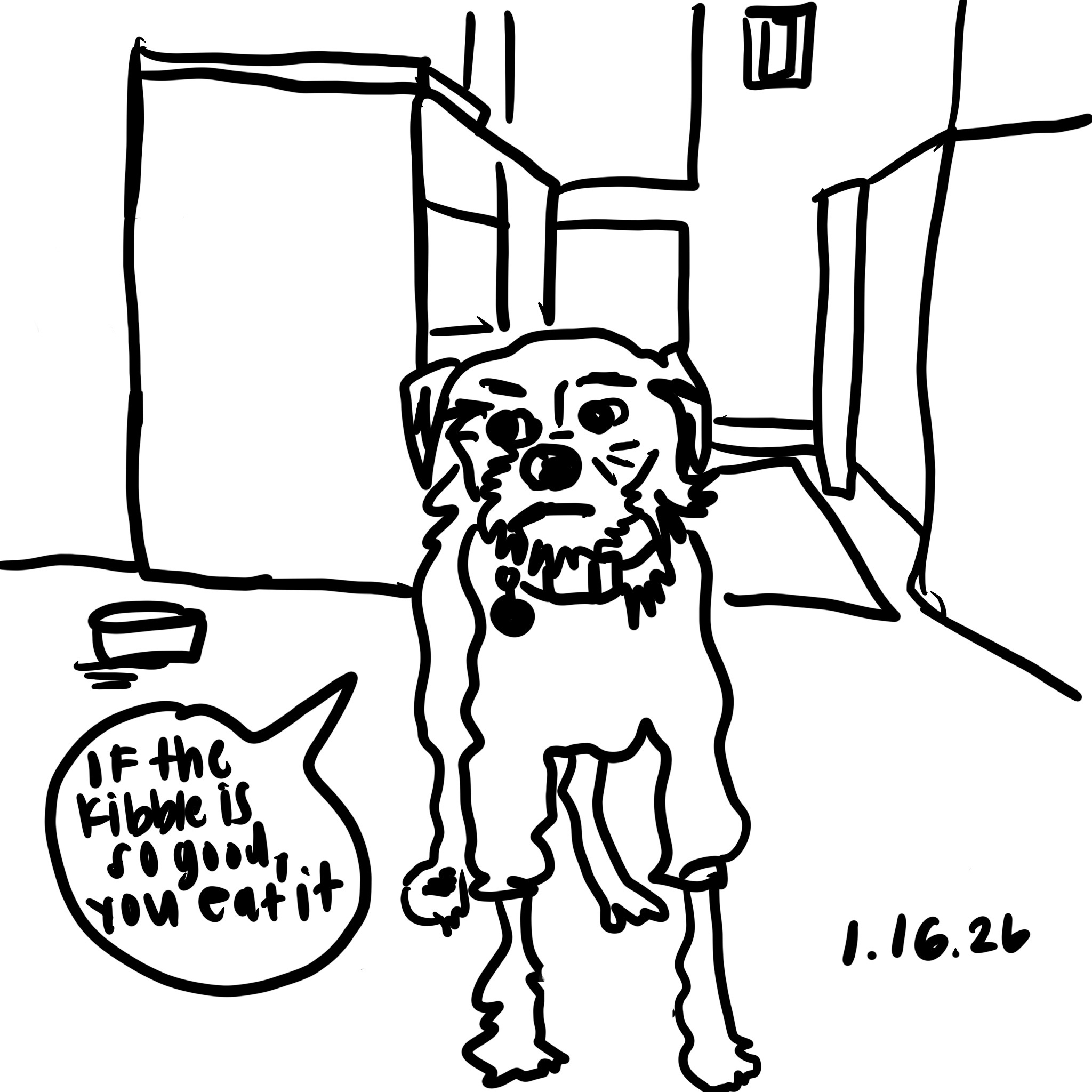
This is a long way to get to my point, and it’s not the ultimate answer to the larger questions of attention annihilation, but a small thing I’ve been doing to re-engage my mind is by drawing my life. To be precise: I’m trying to draw one moment every day from my day. I wrote about this earlier in the year (my January challenge), and I’m really pleased by how much such a small act can feel like mental nourishment. Slowing down and noticing a detail, then drawing it, feeds my brain.
I used to (still do sometimes) make lists in a notebook of what I did on a given day. It doesn’t include any reflection it’s just the facts: walked Ozzy, eggs for breakfast, read Colored Television, coffee at Albina, scrabble with M, made soup from Mississippi Vegan recipe, early bed. Something like that. It centers me. The act of writing a list sears into my mind whole vivid memories of what the day felt like and how it went. It’s creating an archive more meaningful than any IG photo dump.
I’ve felt a similar impact from my daily drawings. They force me to reflect on my day and to be more awake during it as I try to latch onto a small interaction that might prove lovely to draw.
Whatever it is, relating in a tactile way to my surroundings (drawing them, listing them in a notebook) helps to put me inside life in a physical way I appreciate. It nurtures my attention (that precious resource) in the right direction.
Events, news, and updates:
I’m going to be reading at T Kira Madden’s Whidbey Launch Party on March 11 in Brooklyn. Please come if you’re in New York and able to! Her novel is phenomenal. Art in the truest sense. It will change you. There are only a few tickets left, so don’t forget to RSVP if you’d like to come.
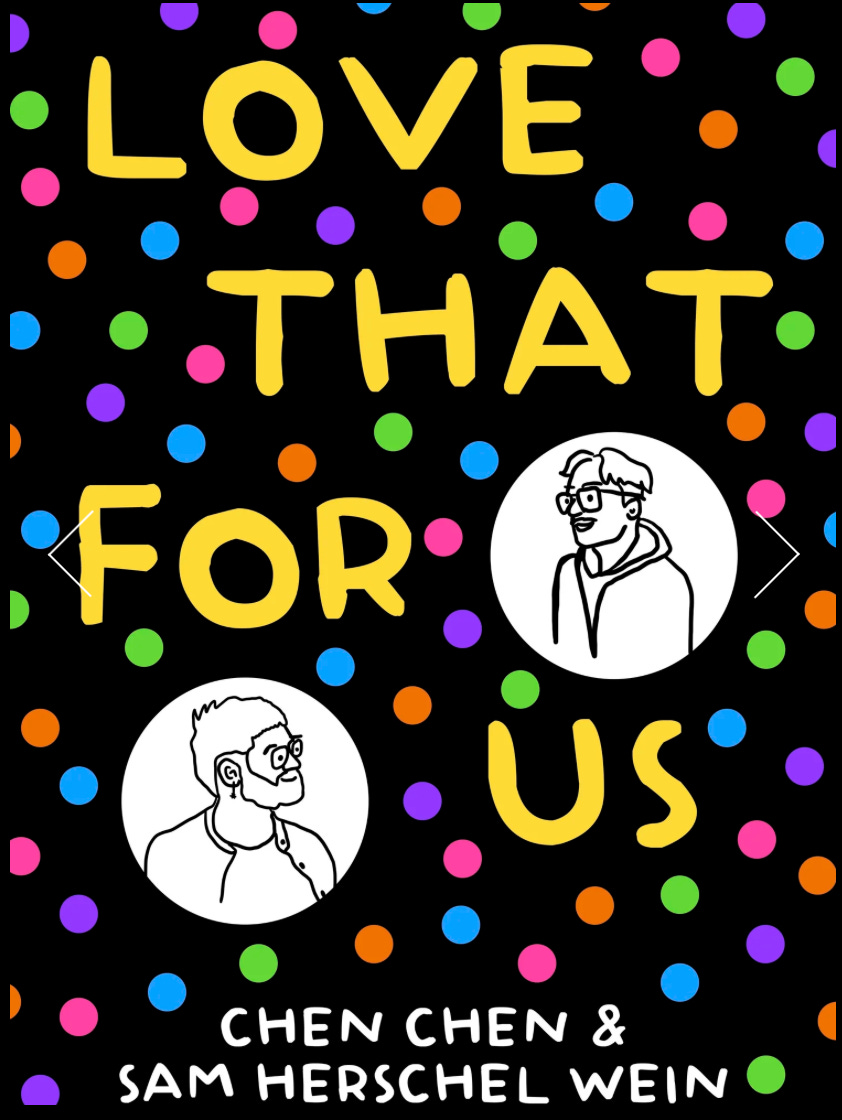
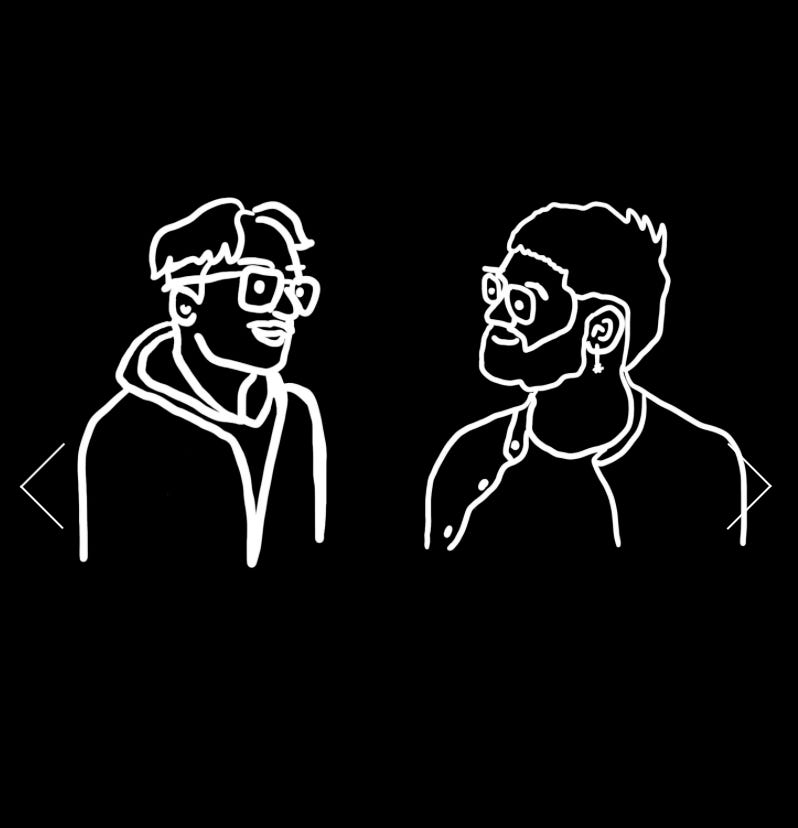
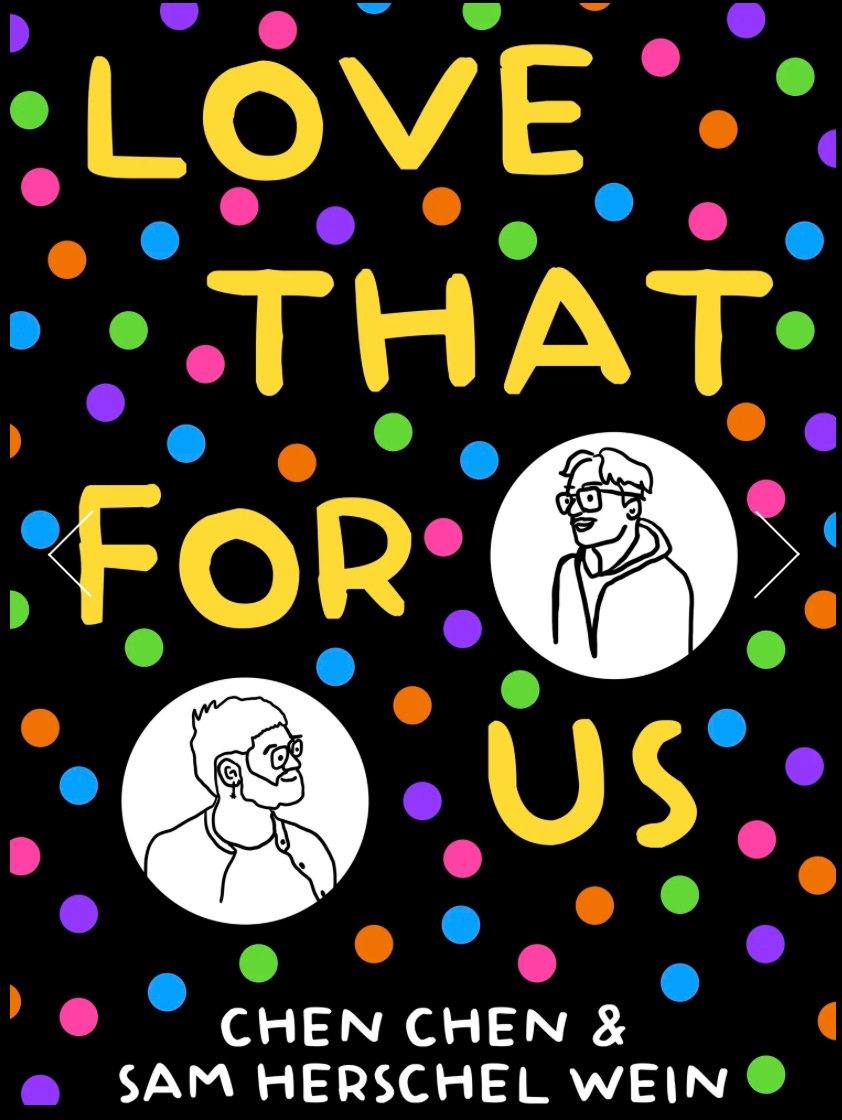
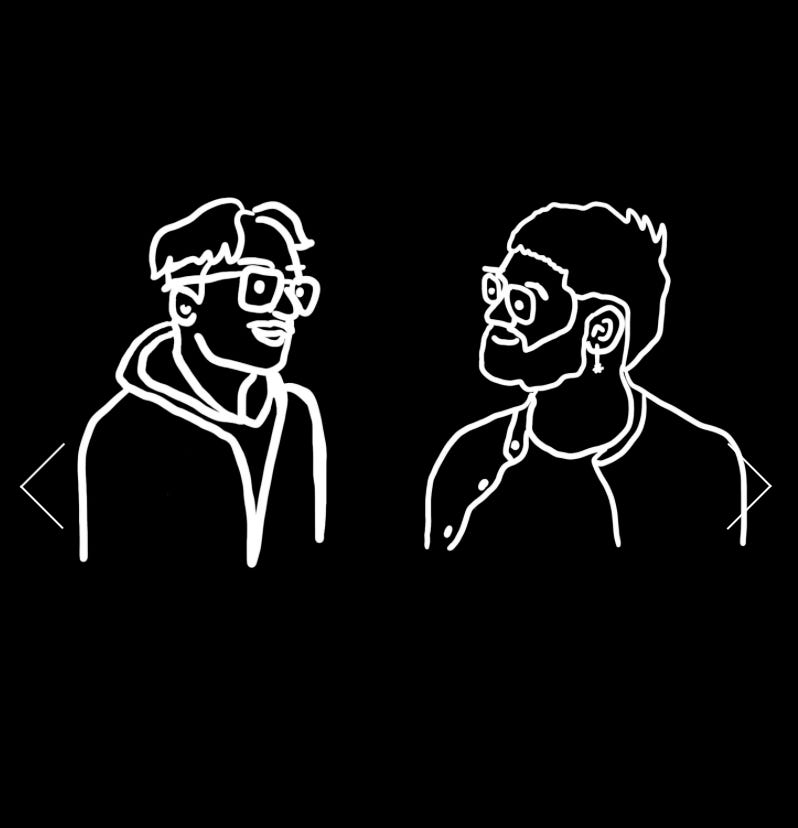
The poets (and best friends) Chen Chen and Sam Herschel Wein asked me to draw their portraits for the cover of their newest book Love That For Us. It was such an honor for them to ask and I really like how the cover turned out. You can (and should) preorder their book here.
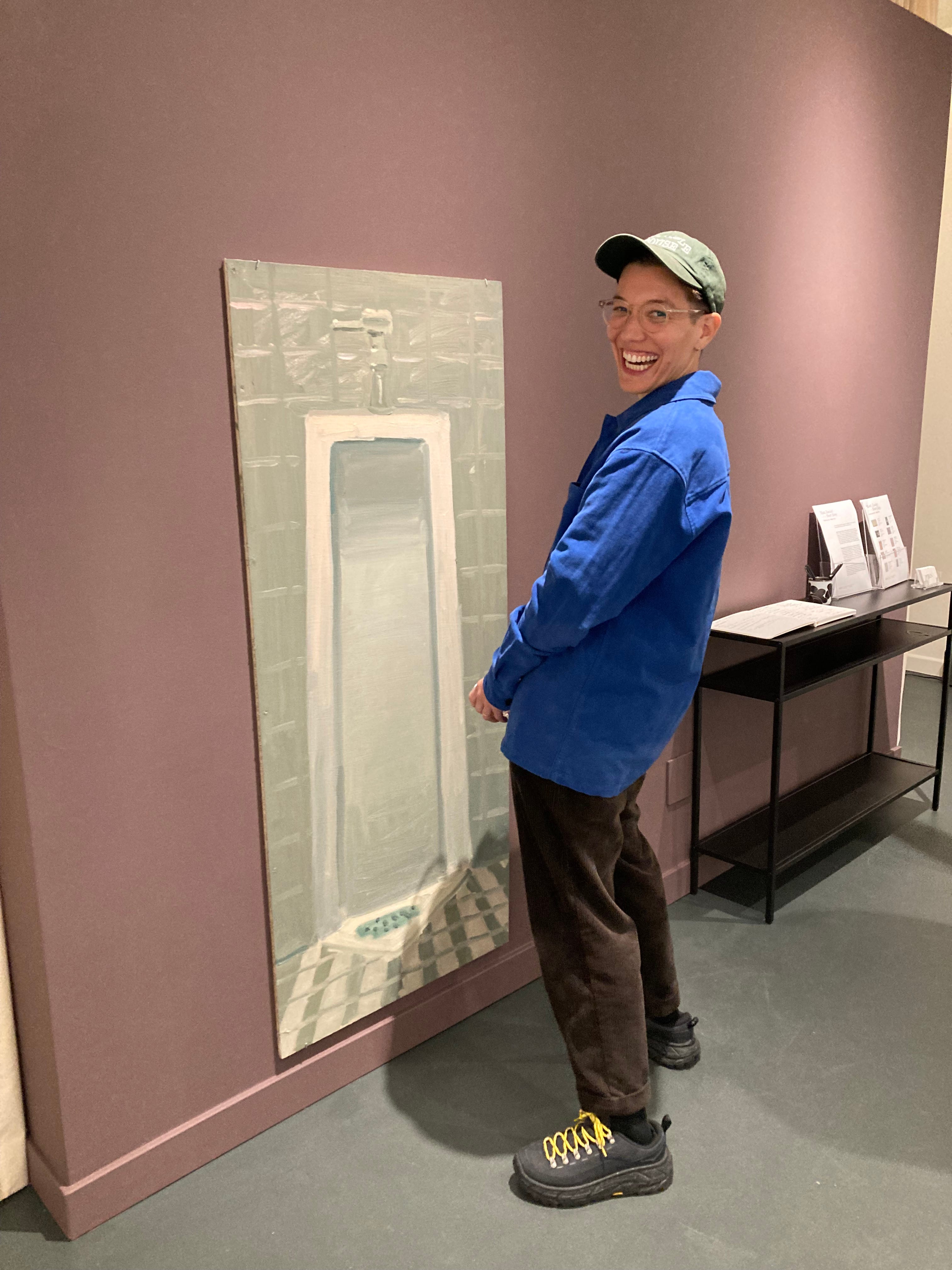
My best friend Matt Zaccari has a solo show on view at Faun in LA. I went to his opening and pretended to use his urinal painting. If you’re in LA, go check it out!
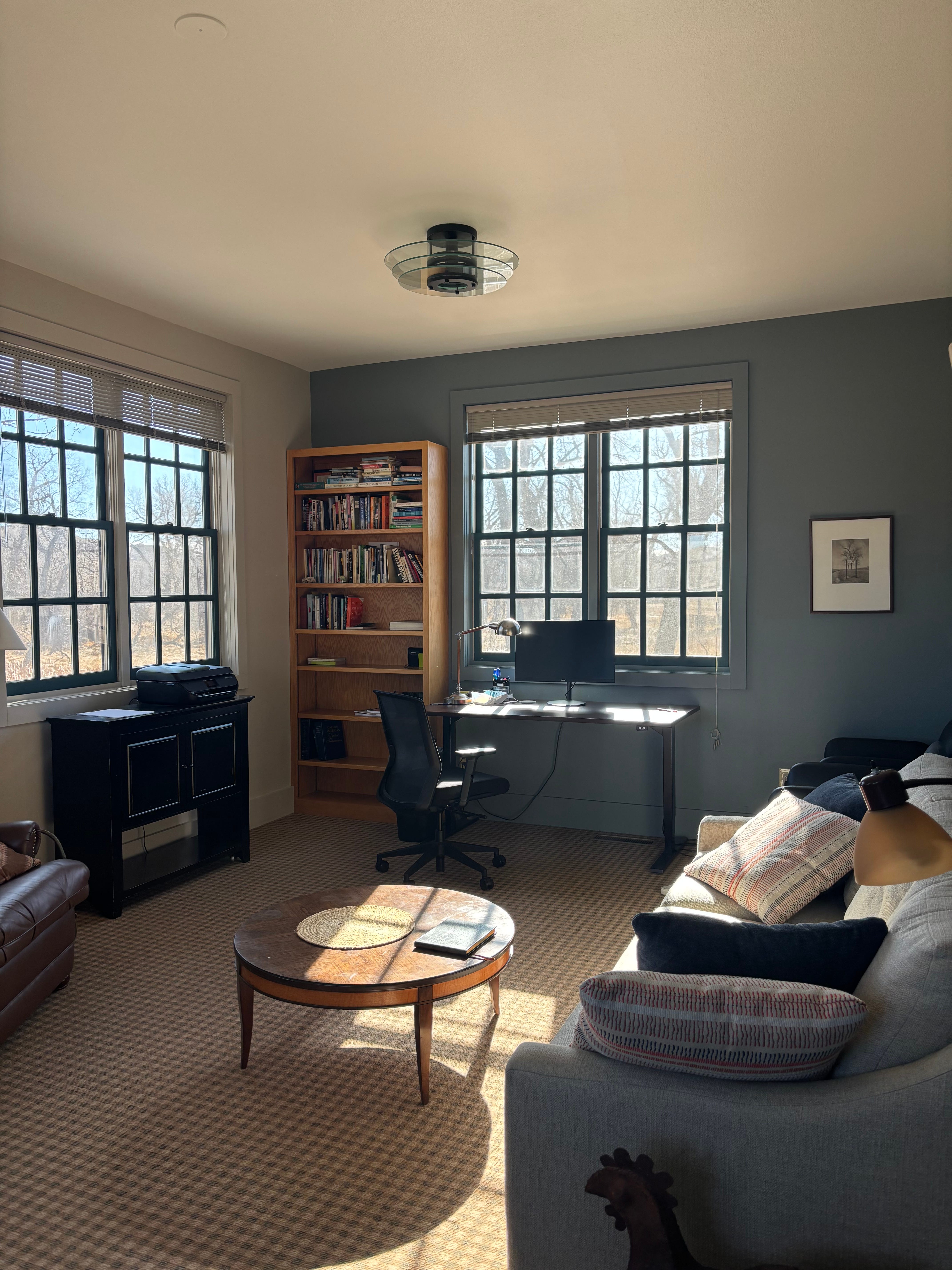
I spent much of February at Ucross Foundation in Wyoming. What an incredible place full of breathtaking beauty and a very caring staff. While there I finished copy edits for Headfirst. Now I’m doing the fun part of sharing moodboards for cover art. When the book cover comes through, it starts to feel real real.
Thanks, as ever, for reading. Do you have ways of paying attention that are helpful to you? What are things you to do resist the pull of the screen and its endless, forever scroll?
Onward ✏️
Genevieve
I admire your commitment to offline life and want more of the same for myself. Love and hate that factoid about 74 GB per day. Certainly feels like it, yeesh! 😵
For attention is of the essence of our powers; it is that which draws other things toward us, it is that which, if we have lived with it, brings the experiences of our lives ready to our hand. If things but make impression enough on you, you will not forget them; and thus, as you go through life, your store of experiences becomes greater, richer, more and more available. But to this end you must cultivate attention — the art of seeing, the art of listening. You needn’t trouble about memory, that will take care of itself; but you must learn to live in the true sense. To pay attention is to live, and to live is to pay attention; and, bear in mind most of all, that your spiritual nature is but a higher faculty of seeing and listening — a finer, nobler way of paying attention. Thus must you learn to live in the fullest sense.
Louis Sullivan, kindergarten chats